 Log in
- What you’ll learn:
- The Most Common Lip Contouring Mistake
- The Physics of Volume
- 1/5 The Light Base: Soft Peach & Gloss Gradient
- 2/5 The Matte Contour: Chocolate Liner & Concealer Highlight
- 3/5 The Dark Nude: Vertical Strokes & Center Gloss
- 4/5 The Precision Overline: Nude Liner & Pink Gloss
- 5/5 The High-Contrast Gloss: Deep Wine Liner & Layered Gloss
- The Bottom Line

The Science of Color: 5 Lip Combos For Visibly Fuller Lips
The human eye sees lip volume mainly by the contrast between the lip edge (a.k.a. vermilion border) and the skin around it. The main idea is simple: cool tones fade, while warm tones stand out. Still, many people use them incorrectly.

By applying basic optical physics, where light colors project forward, and cool-toned dark shades recede, you can increase the visual surface area of your mouth by up to 15% without dermal fillers.
Many people default to warm-toned brown liners, which actually flatten the shape. In this article, we break down five exact color combinations that use these optical principles to build visible volume.
What you’ll learn:
🔸 How to create an anatomical shadow that actually pushes the lip tissue forward
🔸 How the eye reads shadow and depth and why color temperature matters
🔸 Five specific color formulas built around different optical principles
The Most Common Lip Contouring Mistake
A warm brown pencil doesn't register as shadow because the brain associates cool tones with depth, not warm ones. On the outer edge, it reads as an orange stain rather than a receding plane.
A true anatomical shadow is inherently cool and grey-toned. When you replace a warm liner with an ash-brown or taupe shade, the brain interprets that perimeter as a depth marker, pushing the actual lip tissue forward.

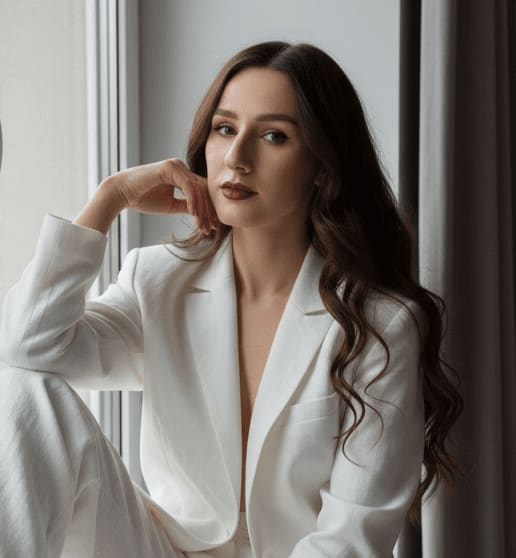
The same logic shows up on professional sets. The Bridgerton Season 4 makeup team used a near-skin-tone liner on Sophie to redefine her lip shape without a visible edge — exactly this principle in practice. Read the full article: Bridgerton's Secret: The Makeup Behind Season 4.
The Physics of Volume
To build structural volume, you must treat the lip as a 3D convex object. Depth perception works through a simple principle: light defines shape. Two physical laws govern every curved surface

- Receding Planes: Cool, desaturated tones read as farther away. An ash-toned perimeter creates a slope where the lip meets the skin, visually pushing the edges back.
- Focal Protrusion: The eye identifies the most reflective point as the closest in space. A concentrated gloss in the center creates exactly that peak.
1/5 The Light Base: Soft Peach & Gloss Gradient
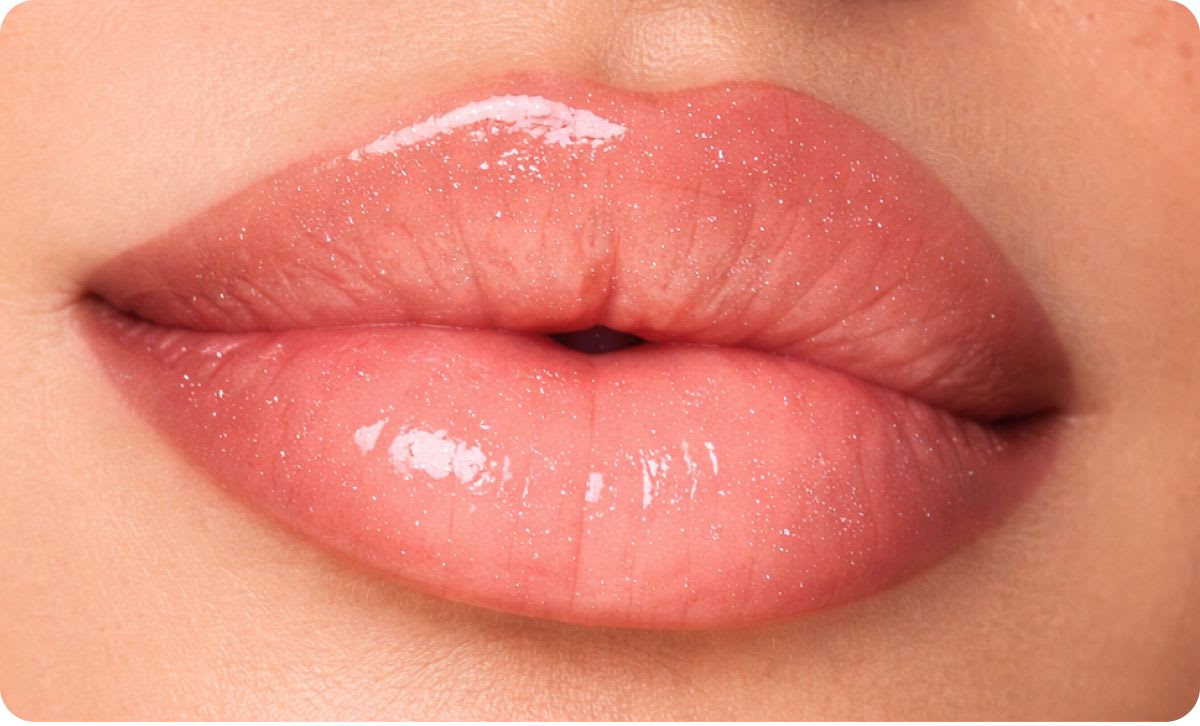
Light shades project forward: the closer the base is to the skin's own reflective range, the more the lips advance visually. A gradient that fades from the outer edges inward removes the hard border that exposes the lip's actual size.
How to execute this technique:
- Apply a creamy lipstick in a soft peach or light pink shade across the entire lip. These shades work because they sit close to the skin's natural reflective range without adding visible pigment weight.
- Using a soft brush, blend from the outer corners inward toward the cupid's bow. On the bottom lip, blend from the edges toward the center. This pulls color away from the perimeter, softening the boundary that exposes the lip's actual size.
- Apply gloss over the entire lip and press lightly with a fingertip to integrate it into the base. Pressing rather than spreading keeps the reflection concentrated rather than diffused.
Start the video tutorial and follow step by step
Use these specific formulas to build this effect:
Anastasia Beverly Hills Lip Velvet (Peach Amber)
This soft-matte liquid lipstick creates the base layer that blends cleanly from the outer edges inward without slipping.
Why it works here:
- Soft-matte finish absorbs light at the perimeter, keeping the gradient visible after blending
- Weightless mousse texture moves with a brush without dragging or pilling
- Full pigment in a single pass means the outer edges stay saturated even after blending inward

BUXOM Full-On Plumping Lip Cream (Creamsicle)
This high-shine gloss delivers the reflection focal point over the blended matte base without disrupting the gradient underneath.
Why it works here:
- Non-sticky formula stays concentrated where you press it rather than spreading to the corners
- High-shine finish creates the reflection focal point over the blended center
- Peptide complex adds surface plumping that amplifies the projection effect
2/5 The Matte Contour: Chocolate Liner & Concealer Highlight

A dark perimeter establishes depth at the edges, but gloss isn't the only way to pull the center forward. A concealer lighter than your skin tone creates the same focal protrusion with a matte finish – the contrast works through value difference rather than reflection.
How to execute this technique:
- Outline the lips with a chocolate-toned liner and fill in the contour fully. Blend the inner edges with a lip brush to eliminate any harsh lines at the border.
- Apply concealer directly to the center of both the upper and lower lip. Blend outward with the same brush, pulling the lighter center slightly into the darker perimeter.
- Add a small amount of chocolate liner back over the areas where the concealer softened the contrast.
- Blend lightly. This step sharpens the depth at the edges without erasing the light center.
Open the tutorial and practice in real time
Use these specific formulas to build this effect:
Estée Lauder Double Wear Long-Lasting 24H Stay-in-Place Lip Liner
This chocolate liner sets into a crease-resistant film that holds the dark perimeter in place through the entire blending process.
Why it works here:
- 24-hour wear prevents the dark boundary from breaking down as you blend the concealer over it
- Precise tip delivers a clean, controllable line at the outer edge
- Matte finish absorbs light at the perimeter to maximize the contrast with the lighter center

Bobbi Brown Skin Full Cover Concealer
Applying this full-coverage concealer provides enough opacity to establish a visible light focal point over the dark liner base.
Why it works here:
- Full coverage creates a strong value contrast against the chocolate perimeter in a single application
- Skin-tone range includes shades light enough to function as a highlight on deeper skin tones
- Creamy texture blends outward without pulling the dark liner underneath

3/5 The Dark Nude: Vertical Strokes & Center Gloss
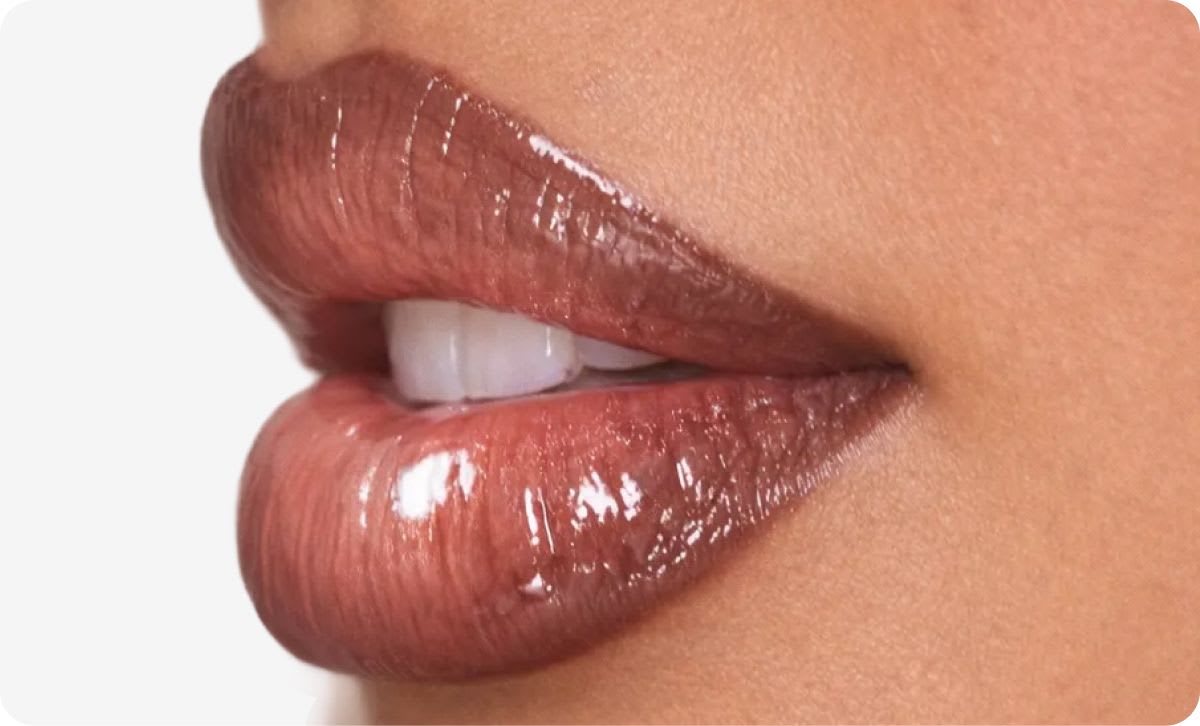
Horizontal application defines width. Vertical strokes inside the lip read as surface elevation rather than flat pigment – the eye interprets them as a raised plane projecting forward.
How to execute this technique:
- Outline the lips with a dark nude liner and fill in the outer corners to establish shadow at the edges. Blend the corners inward with a fingertip.
- Draw short vertical strokes upward from the center of the bottom lip and downward from the cupid's bow.
- Keep them concentrated in the center third of the lip, not extended to the corners.
- Apply a nude gloss strictly to the center of the bottom lip and spread lightly across both lips. The gloss catches light directly over the vertical strokes, amplifying the projection effect.
Watch now and apply each step as you go
Use these specific formulas to build this effect:
Tarte Maracuja Juicy Lip Liner
This creamy liner blends with a fingertip immediately after application, which is essential for pulling the vertical strokes into the base without dragging.
Why it works here:
- Maracuja oil and hyaluronic acid keep the formula pliable long enough to blend vertical strokes cleanly
- Custom lip-lifter tip delivers precise lines at the outer corners and along the center strokes
- Ultra-creamy formula prevents the liner from setting too hard before blending is complete

KIKO Milano 3D Hydra Lip Gloss
A concentrated drop of this gloss in the center catches light directly over the vertical strokes to amplify the projection effect.
Why it works here:
- Non-sticky formula stays where you place it without migrating over the liner
- Flax seed oil delivers slip that allows the gloss to spread from the center outward in a single pass
- High-shine finish creates a concentrated reflection point over the center strokes
4/5 The Precision Overline: Nude Liner & Pink Gloss

Full overlining exposes itself because the entire border shifts uniformly. Extending the line only at the cupid's bow and the center of the bottom lip moves the two points the eye uses to judge volume – without touching the corners, where artificial lines are most visible.
How to execute this technique:
- Using a nude liner, extend the line fractionally beyond the vermilion border only at the cupid's bow peaks and the center of the bottom lip. Leave the corners at their natural position.
- Blend the extended line with a fingertip until no hard edge remains at the new border.
- Place a small amount of soft pink gloss directly in the center of both lips and blend inward with a finger.
- The gloss concentrates the focal point exactly where the overline created the new peak.
Start the tutorial and build the look in real time
Use these specific formulas to build this effect:
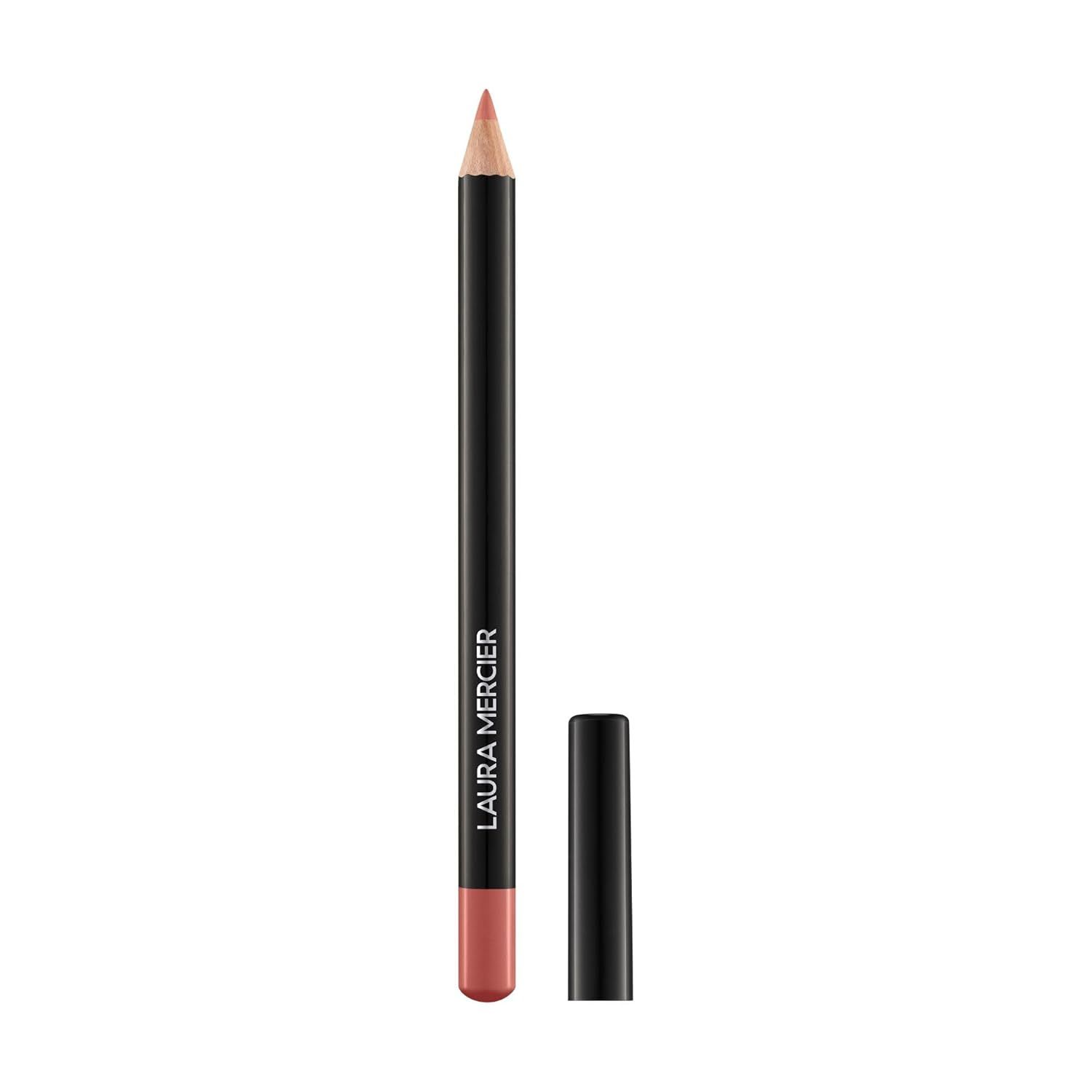
Laura Mercier Caviar Perfecting Lip Liner Pencil
This liner holds the extended border in place through blending without feathering into the surrounding skin.
Why it works here:
- Feather-proof formula keeps the overlined edge clean after fingertip blending
- Smooth application allows precise placement at the cupid's bow without dragging
- 16-hour wear holds the boundary in place without requiring touch-ups
Clinique Pop Plush Creamy Lip Gloss (AB Bubblegum Pop)
A small amount of this gloss in the center creates the reflection focal point over the nude base.
Why it works here:
- High-shine finish concentrates light exactly where the overline created the new peak
- Hyaluronic acid and butter complex condition the lip surface without breaking down the liner underneath
- Creamy texture blends inward from the center in a single pass without spreading to the corners

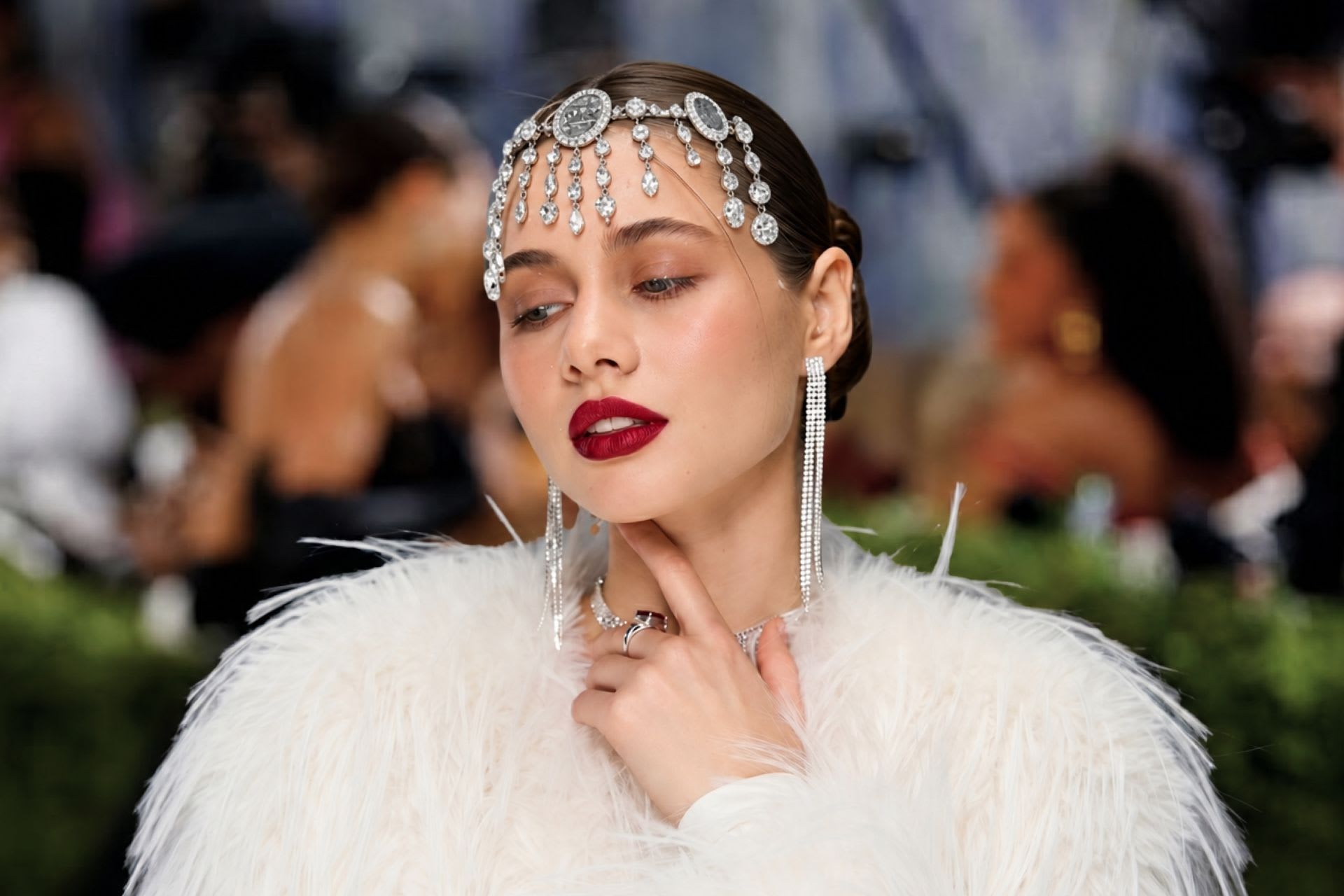
5/5 The High-Contrast Gloss: Deep Wine Liner & Layered Gloss

Maximum contrast between a saturated dark perimeter and a concentrated light center produces the strongest projection effect. A two-layer gloss finish builds reflection depth that a single application cannot achieve.
How to execute this technique:
- Fill the entire lip with a deep wine liner, defining the contour carefully. Press the lips together mid-application to transfer pigment evenly across the inner surface, then go over any areas that need additional coverage.
- Apply a soft pink gloss to the center of both lips and blend lightly with a fingertip. This establishes the first contrast layer between the dark perimeter and the light center.
- Apply a clear gloss over the entire lip as a second layer. The clear layer amplifies the reflection of the pink underneath without shifting the color, concentrating the visual peak at the center.
Follow the tutorial and try it yourself in real time
Achieve this mirror-like reflection with these specific formulas:
Charlotte Tilbury Lip Cheat Lip Liner (Walk Of No Shame)
This deep berry-rose liner holds the saturated perimeter in place through two layers of gloss application.
Why it works here:
- Waterproof, smudge-proof formula prevents the dark boundary from breaking down under the gloss layers
- Hydrating oils keep the liner pliable enough to press evenly across the inner lip surface
- Rich color payoff establishes maximum contrast against the light pink center in a single application

Charlotte Tilbury Lip Lustre Hydrating Lip Gloss (Portobello Girl)
This high-shine gloss builds the two-layer reflection system over the dark liner base.
Why it works here:
- Non-sticky formula stays concentrated at the center without migrating into the dark perimeter
- High-shine finish creates a strong reflection focal point over the pink layer in the second application
- Lotus extract conditions the lip surface without breaking down the liner underneath

The Bottom Line
Understanding the physics of volume is only the first step. The harder part is adapting these principles to your specific features consistently, without reverting to old habits every time you sit down with a mirror.
That's the gap EpicaBeauty is designed to close. The platform combines daily tracking with visual analysis so your eye learns to read proportions accurately and holds that standard across every application. It's built for people who want a repeatable routine, not a technique they have to relearn from scratch each week.
To make sure your application always achieves these results, keep these three structural principles in mind:
- Every technique here works through the same mechanism: a darker or cooler perimeter that recedes, and a lighter or more reflective center that advances. The specific shades change – but the contrast between the two zones never does.
- Volume is created by a focal point. Keep the light pigments strictly in the center to force the tissue forward.
- Precise overlining only works when the contrast between the dark edge and the light interior is sharp. A blurred or low-contrast boundary will always register as a smaller shape.
The eye follows the light, so place your highlights where you want the volume. Shifting the reflection point is the most direct way to change the lip's profile.
Connect with us


Ready to Find Perfect Style?
TAKE A QUIZ