 Log in
- TL;DR
- What Is Acne Caused by Makeup?
- How Makeup Causes Acne: Step-by-Step Mechanism
- Ingredients in Makeup That Can Trigger Breakouts
- Who Is Most Likely to Get Acne from Makeup?
- Common Mistakes That Cause Makeup Breakouts
- How to Prevent Acne from Makeup
- How to Tell If Your Acne Is Caused by Makeup
- When to See a Dermatologist
Can Makeup Cause Acne?

Reviewed by Holly Singletary
Board Certified Dermatologist
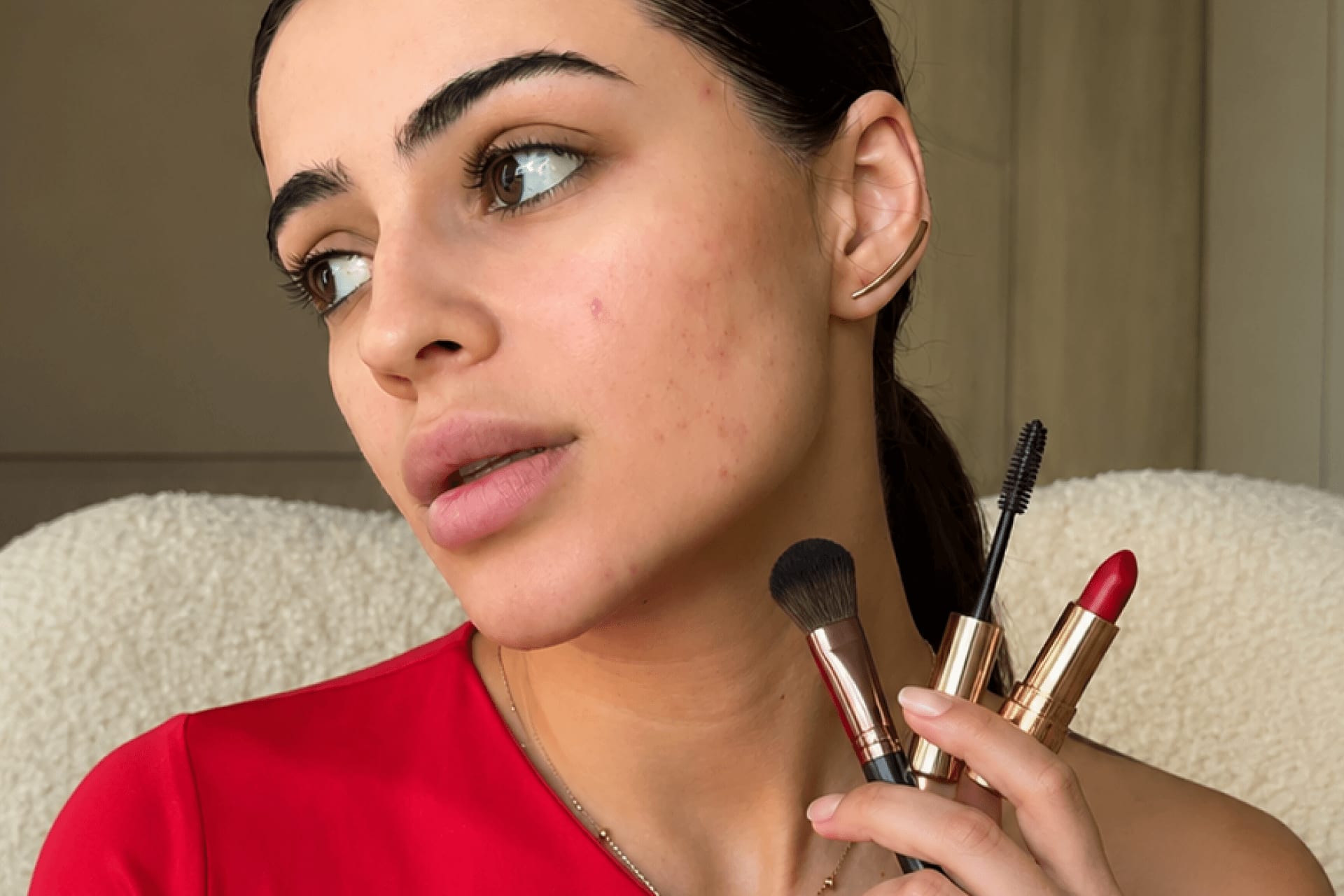
Makeup can leave you with the very thing it is meant to hide: acne. The clogged-pore version it triggers has a clinical name — acne cosmetica, small bumps that surface exactly where the product sits. Dermatologists Albert Kligman and Otto Mills first described it in 1972, after linking persistent small comedones in adult women to the creams they used every day.
For perspective: acne is the most common skin condition in the United States, affecting up to 50 million people a year. Makeup is one trigger among several, not the root cause for everyone, but for many people, it is the part they can actually control.
The short version: makeup causes acne when it blocks the pore, traps oil and dead skin behind the plug, and lets the follicle's normal bacteria multiply until the area inflames. Change the products and habits that create that blockage, and this kind of acne usually clears.
What follows covers the ingredients that raise the risk, who is most affected, the habits that exacerbate it, how to prevent it, and when to consult a dermatologist.
TL;DR
- How to spot it: acne cosmetica clusters exactly where makeup sits and tends to start within weeks of a new product.
- The mechanism: makeup blocks the pore, oil builds up behind it, bacteria multiply, and the follicle inflames.
- The fixes that matter most: never sleep in makeup, clean brushes every 7–10 days, replace old products, and go lighter.
- See a dermatologist if the acne is inflamed, painful, scarring, or not clearing after six to eight weeks.
What Is Acne Caused by Makeup?
Acne cosmetica is mild acne triggered by cosmetic or skincare products. It shows up as small, fairly uniform bumps — mostly closed comedones, the kind often called whiteheads — with few of the red, painful spots seen in other acne.
The term comes from that 1972 work by Kligman and Mills, who reported low-grade, persistent comedones in roughly one in three adult women who used facial cosmetics. It established that a product, not just hormones or genetics, can set off a breakout.
The two comedone types are worth telling apart. A closed comedone is a pore sealed under a thin layer of skin, so it stays a small flesh-colored or white bump. An open comedone is a pore open at the surface, where the trapped material oxidizes and darkens into a blackhead. Acne cosmetica skews toward closed comedones, clustered in the exact zones makeup covers.

This is a documented condition, not a single stress pimple. The tell is location and timing: it groups where product sits and builds gradually with repeated use. Because the cause is external, it is also one of the more controllable forms of acne — remove the trigger and the skin usually recovers.
How Makeup Causes Acne: Step-by-Step Mechanism
Certain cosmetic products may contribute to acne through blocking the follicle and comedone formation, although acne is a multifactorial condition involving abnormal keratinization, sebum production, inflammation, and Cutibacterium acnes. Here is each link.
Step one, the pore gets blocked. A pore is the opening of a hair follicle, and each follicle has a gland that pushes out sebum — the skin's natural oil. Heavy, occlusive or oily makeup, layered over the day's dead skin cells, can settle in and over that opening and form a plug. Dermatologists call the earliest plug a microcomedone — the seed of every breakout, and the start of makeup clogging pores.

Step two, sebum builds up behind the plug. The gland keeps producing oil whether or not the exit is open. With the opening blocked, sebum collects behind the plug and the follicle swells. The trapped, oil-rich space is the real problem — not the oil itself, but the fact that it has nowhere to drain.

Step three, bacteria multiply. A bacterium called Cutibacterium acnes (renamed from Propionibacterium acnes in 2016) lives on everyone's skin and is normally harmless. It feeds on sebum and avoids oxygen, so a sealed, oil-filled pore is close to ideal for it. Inside the plugged follicle, its numbers climb.

Step four, the follicle inflames. As the bacteria feed and the follicle wall stretches, they release substances the immune system reads as a threat. The body answers with inflammation — the redness, swelling and tenderness of a papule or pustule. A comedone left uninflamed stays a small bump; once inflammation joins in, it becomes the spot most people picture as acne.
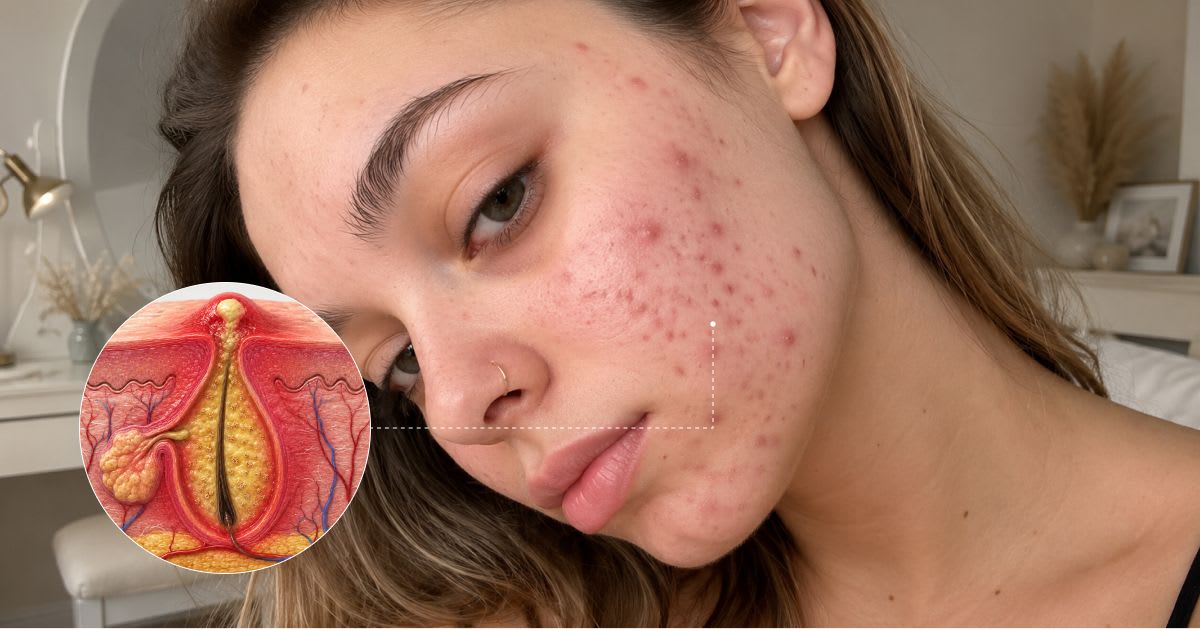
That full chain — block, build-up, bacteria, inflammation — is why makeup-related acne can look identical to ordinary acne. The only difference is the trigger sitting at the very start of it.
Ingredients in Makeup That Can Trigger Breakouts
Ingredients that raise breakout risk are called comedogenic — literally, comedone-forming. They tend to be heavy oils, certain fatty-acid derivatives, and some waxes and pigments that settle into pores and stay there.
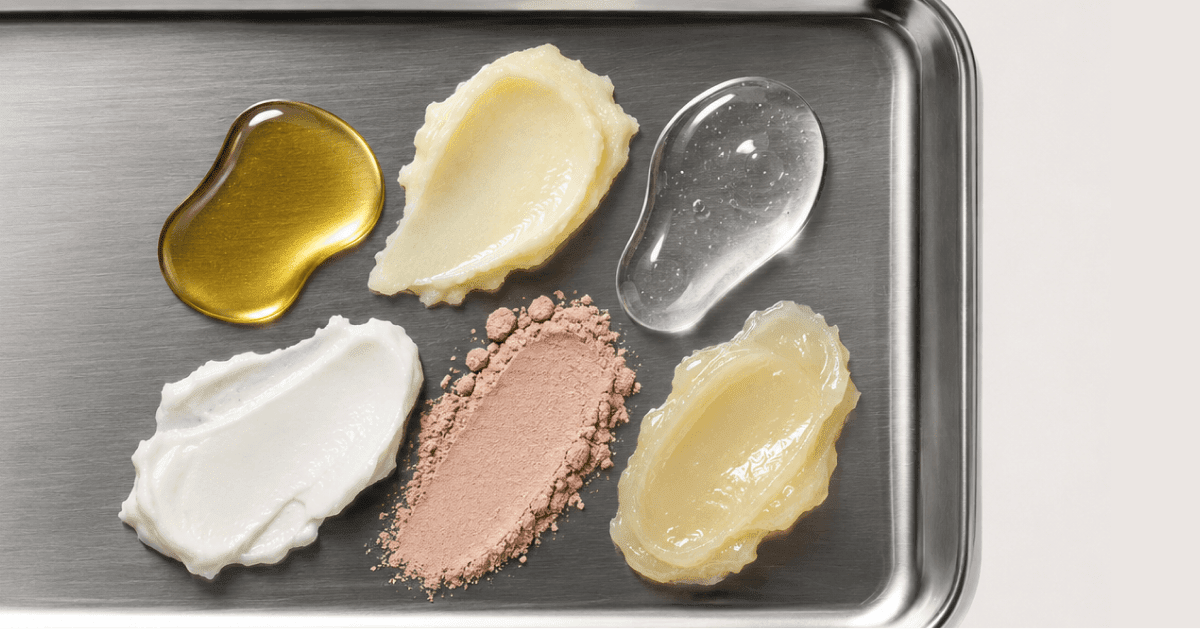
Comedogenic ingredients commonly fall into a few broad categories:
- Heavy plant oils and butters in high concentration, such as coconut oil and cocoa butter.
- Certain fatty-acid esters used to give a smooth glide, such as isopropyl myristate and isopropyl palmitate.
- Waxes and thickeners that add staying power to long-wear and waterproof formulas.
- Some pigments and bulking agents, including those in heavy powders and cream blushes.
- Lanolin and several of its derivatives, traditionally used for slip and moisture.
A caution on those lists, though. Comedogenicity ratings mostly come from a decades-old rabbit-ear test that is overly sensitive and a poor match for human facial skin. Kligman and Mills themselves later showed that ingredients which were potent comedogens in rabbits often produced little or no acne on people.
A single ingredient's score also does not predict how a finished product behaves, because concentration and the rest of the formula change the result. A long "ingredients to fear" list is therefore more alarming than useful.
Oil-based versus non-comedogenic is the more practical distinction. Oil-based formulas use oils as a main base; they are not automatically pore-clogging, but on oily or acne-prone skin they add to an already oil-rich environment.
"Non-comedogenic" is meant to signal lower clogging risk — yet the U.S. FDA does not define, test or certify the term, so it is a manufacturer's claim rather than a regulated guarantee.
Products with greater comedogenic potential may increase the risk of breakouts in susceptible individuals, although individual response varies. This is why a rich, long-wear formula is a frequent culprit — acne from foundation usually traces back to a heavy, occlusive product worn for long hours. Comedogenic ingredients raise the risk of breakouts; they do not guarantee one.
The pattern shows up in research, too. A 2025 case-control study found that powders and cleansers containing comedogenic ingredients were independent risk factors for acne — powders carried over three times the odds (odds ratio 3.47), and comedogenic cleansers about two and a half times (2.49).
Pore-clogging is a separate question from ingredient safety. If you also want to know which compounds are worth avoiding for health reasons, our guide to 15 toxic ingredients to avoid in skincare products breaks down what to check on a label and why.
Who Is Most Likely to Get Acne from Makeup?
Skin type strongly affects the risk. Oily and acne-prone skin react most readily; sensitive skin tends to inflame faster.
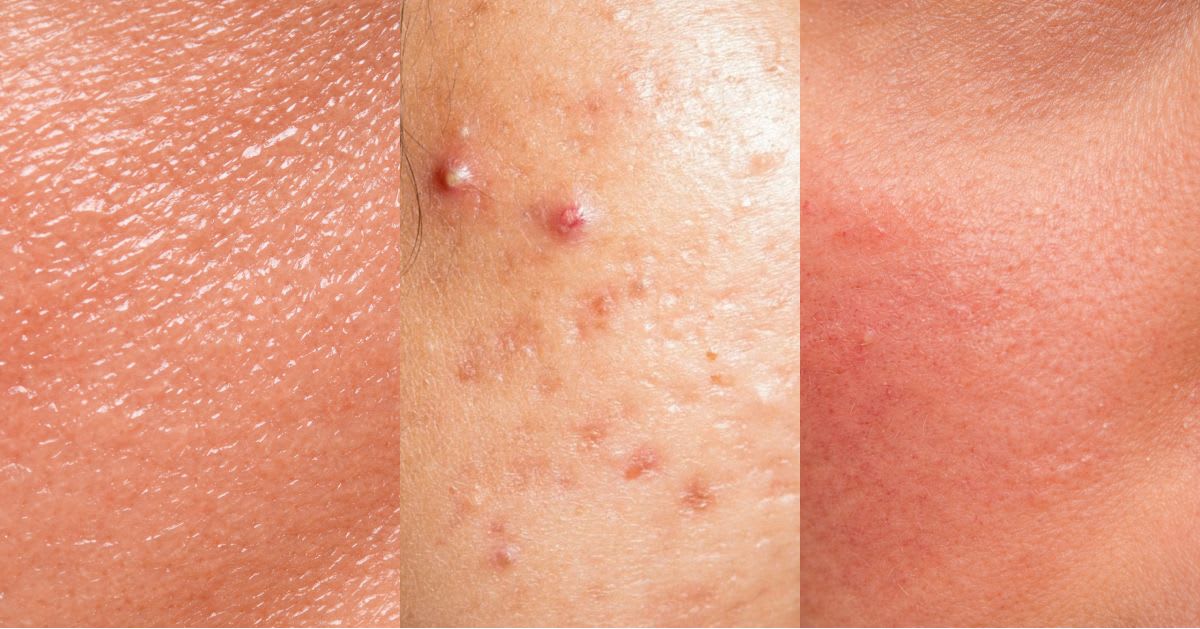
- Oily skin: more sebum means more raw material to get trapped behind a plug, so the same product clogs more easily.
- Acne-prone skin: follicles already shed cells unevenly and form microcomedones with little provocation, so they need less of a push to break out.
- Sensitive skin: more reactive to irritation, and irritation can tip a clogged pore into a visible, red spot sooner.
Habits and conditions stack on top of skin type. Wearing makeup for long hours, in heat or humidity where sweat mixes with product, or reapplying through the day without cleansing all raise the odds. Hormonal shifts change baseline oil too, so the same makeup may clog at some points in a monthly cycle and not others.
Dry or balanced skin can still develop acne cosmetica, but it usually takes a heavier or more occlusive product to get there.
Not sure which category your skin falls into? EpicaBeauty's skin scanner sorts oily, combination, and acne-prone skin in about a minute — useful for gauging how cautious to be with heavy or oil-based makeup.
Common Mistakes That Cause Makeup Breakouts
Often the product is fine and the habit is the problem. Four behaviors do most of the damage, and each one feeds the same chain of clogging, bacteria and inflammation.
Sleeping in makeup. Leaving makeup on overnight presses oil, dead cells and the day's grime into pores for hours. The AAD notes that even non-comedogenic makeup can cause breakouts if it is not removed before bed. Its guidance is blunt: "Remove your makeup before you go to bed. No exceptions."

Dirty brushes and sponges. Tools collect oil, skin cells and bacteria. Studies have found that most tested makeup tools carry bacterial or fungal contamination, including Staphylococcus aureus and E. coli, and a dirty brush reloads that onto skin with every pass. The AAD recommends cleaning brushes that touch foundation about every 7 to 10 days.

Expired products. Cosmetics are not sterile forever. The AAD advises tossing mascara about every three months and replacing liquid foundation around every six, because bacteria build up with use — and old product means more microbes going onto skin.

Heavy layering. Piling on thick coats, or reapplying over sweat without cleansing first, thickens the occlusive film on the skin and the plug forming beneath it.
Poor or skipped cleansing ties these together. Leaving that bacterial load and product film in place — especially overnight — is exactly the condition C. acnes needs to multiply and inflame the follicle. The behavior raises bacteria or blockage on skin, and both push the pore further toward a breakout.
How to Prevent Acne from Makeup
To prevent acne from makeup, lower two things: how much gets trapped in the pore, and how much bacteria sits on the skin. A handful of habits cover both.

- Choose lighter, oil-free or non-comedogenic formulas — treat the label as a useful starting point rather than a guarantee, and watch how your own skin responds over a few weeks.
- Cleanse properly, morning and night. The AAD recommends washing your face when you wake and before bed with a gentle cleanser. For a full face of long-wear or waterproof makeup, a two-step (double) cleanse — an oil-based remover first to lift the makeup, then a gentle water-based cleanser — removes more than a single wash.
- Never sleep in makeup — remove all of it, including eye makeup, before bed, every night.
- Clean your tools on a schedule — brushes and sponges every 7 to 10 days, and sooner for sponges, which stay damp and grow bacteria faster.
- Respect expiry dates — roughly three months for mascara, six for liquid foundation.
- Go lighter when you can — fewer, thinner layers, plus stretches of time without makeup, give pores a chance to clear.
What matters most is doing it consistently: cleansing and makeup removal only help if they happen every night. If a set routine makes that easier, watch the Clear-Skin Routine for Acne-Prone Skin lesson in EpicaBeauty — it lays out the morning and evening order to follow.
How to Tell If Your Acne Is Caused by Makeup
Three clues point to makeup acne: where the bumps are, when they started, and what they look like.
- Where: acne cosmetica clusters exactly where product sits — cheeks, forehead, jaw, and along the hairline where foundation or powder migrates. Spots that map to your makeup zones are a strong sign.
- When: it tends to begin within a few weeks of starting a new product and to ease once you stop using it.
- What: mostly small, uniform closed comedones, rather than the deep, painful, cyclical cysts of hormonal acne, which usually concentrate on the lower face and jaw and track with the menstrual cycle.
One practical approach is to discontinue a suspected product for several weeks while keeping the rest of the routine stable. Improvement may suggest the product was contributing.
When to See a Dermatologist
If careful changes do not help, or the acne is inflamed or scarring, it is time for professional care. See a board-certified dermatologist when:
- It does not clear after you remove the suspected products and use over-the-counter treatment for six to eight weeks.
- It is inflammatory — red, swollen, painful — or you develop deep cysts or nodules under the skin. The AAD notes these rarely respond to store-bought products and usually need prescription treatment.
- It leaves marks or scars, or it is affecting how you feel day to day.
A dermatologist can confirm whether cosmetics are the cause, rule out conditions that mimic acne, and prescribe stronger treatment than anything sold over the counter. Getting help earlier also lowers the chance of lasting scars.
Safety Disclaimer
This article is for general educational and informational purposes only. It does not constitute medical advice, diagnosis, or treatment, and is not a substitute for consultation with a qualified healthcare professional. Skin conditions vary from person to person — always seek the advice of a board-certified dermatologist or physician with any questions about your skin, and never disregard or delay professional medical advice because of something you have read here. If a product causes pain, swelling, or a reaction, stop using it and consult a professional.
Connect with us


Ready to Find Perfect Style?
TAKE A QUIZ- American Academy of Dermatology. Skin Conditions by the Numbers. February 11, 2025. https://www.aad.org/media/stats-numbers. Accessed June 10, 2026.
- American Academy of Dermatology. I Have Acne! Is It Okay to Wear Makeup? May 14, 2024. https://www.aad.org/public/diseases/acne/causes/makeup. Accessed June 10, 2026.
- American Academy of Dermatology. How to Clean Your Makeup Brushes. August 20, 2024. https://www.aad.org/public/everyday-care/skin-care-secrets/routine/clean-your-makeup-brushes. Accessed June 10, 2026.
- American Academy of Dermatology. When to Toss Your Makeup and Sunscreen. June 18, 2024. https://www.aad.org/public/everyday-care/skin-care-secrets/prevent-skin-problems/replace-makeup-sunscreen. Accessed June 10, 2026.
- American Academy of Dermatology. Treating Acne? Is It Time to See a Dermatologist? March 12, 2024. https://www.aad.org/public/diseases/acne/diy/when-derm. Accessed June 10, 2026.
- U.S. Food and Drug Administration. Shelf Life and Expiration Dating of Cosmetics. February 25, 2022. https://www.fda.gov/cosmetics/cosmetics-labeling/shelf-life-and-expiration-dating-cosmetics. Accessed June 10, 2026.
- Archives of Dermatology. Acne Cosmetica (Kligman AM, Mills OH). December 1972. https://pubmed.ncbi.nlm.nih.gov/4264346/. Accessed June 10, 2026.
- JAAD Reviews. Comedogenicity in Cosmeceuticals: Clinical Relevance and Regulatory Gaps. January 2025. https://www.jaadreviews.org/article/S2950-1989(25)00088-1/fulltext. Accessed June 10, 2026.
- PMC. Updated Treatment for Acne: Targeted Therapy Based on Pathogenesis. July 23, 2021. https://pmc.ncbi.nlm.nih.gov/articles/PMC8322376/. Accessed June 10, 2026.
- Clinical, Cosmetic and Investigational Dermatology. A Case-Control Study Exploring the Association Between Cosmetic Use and Acne Risk. August 14, 2025. https://pmc.ncbi.nlm.nih.gov/articles/PMC12323874/. Accessed June 10, 2026.
- PMC. Assessing Bacterial Contamination in Cosmetic Brushes. June 5, 2024. https://pmc.ncbi.nlm.nih.gov/articles/PMC12074853/. Accessed June 10, 2026.